
Following up with my latest article about the things no one tells you when starting yoga.
If you’re still feeling self-conscious about your flexibility or unsure whether you’ll be able to keep up in a class, I’ve got your back.
Before you step on the mat, here are 3 tips that can help you feel more confident and at ease.
Do some teacher and style scouting.
Not all yoga classes—or teachers—are the same.
Finding the right fit can make a world of difference, especially when you’re just starting out.
That’s why I put together this simple chart to give you a general idea of the most popular yoga styles and their benefits:
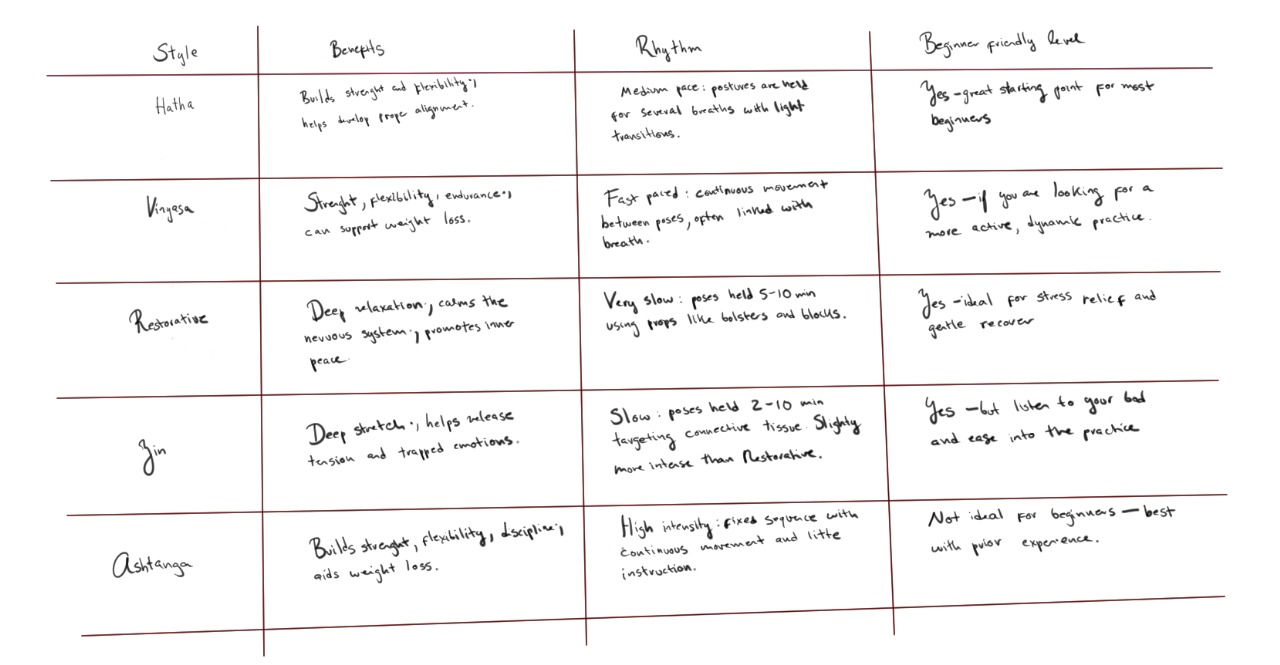
I know my handwriting can be challenging (I’m working on it to make better charts for you :), so you can check the online version of the table right here:
| Style | Benefits | Rhythm | Beginner friendly level |
| Hatha | Builds strength and flexibility; helps develop proper alignment. | Medium pace: postures are held for several breaths with light transitions. | Yes—great starting point for most beginners. |
| Vinyasa | Strength, flexibility, endurance; can support weight loss. | Fast-paced: continuous movement between poses, often linked with breath. | Yes—if you’re looking for a more active, dynamic practice. |
| Restorative | Deep relaxation; calms the nervous system; promotes inner peace. | Very slow: poses held 5–10 minutes using props like bolsters and blocks. | Yes—ideal for stress relief and gentle recovery. |
| Yin | Deep stretch; helps release tension and trapped emotions. | Slow: poses held for 2–10 minutes, targeting connective tissue. Slightly more intense than Restorative. | Yes—but listen to your body and ease into the practice. |
| Ashtanga | Builds strength, flexibility, discipline; aids weight loss. | High intensity: fixed sequence with continuous movement and little instruction. | Not ideal for beginners — best with prior experience. |
Quick suggestions:
- If you’re new to yoga, Hatha and Restorative are excellent places to begin.
- Want to move and sweat a little? Try Vinyasa.
- Feeling emotionally heavy or stiff? Yin can be a powerful release —just listen to your body.
Consider Taking Private Lessons First
If you learn best one-on-one, private yoga sessions can be a fantastic way to start.
Working privately with a teacher gives you the space to ask questions, build confidence, and develop a foundation before stepping into a group class—if you even want to. Some people never feel called to practice in studios, and that’s completely valid.
Private sessions also tend to support faster, more personalized growth. Since the teacher tailors each class to your specific needs, goals, and body, you’re able to move at your own pace and address what truly matters to you.
There’s also the comfort factor. Practicing at home removes the stress of commuting, the pressure of being around others, and the feeling that you need to “keep up.”
Many teachers—including myself—offer online private sessions, so you can begin your practice from wherever you are, with just a mat and an open heart.
Try Some YouTube Classes or a Yoga App (Yes, It Totally Counts!)
If you are still unsure if you want to commit, a good YouTube search can help you get the basics down before making any decision.
Here is some inspiration if you don’t know were to begin:
Adriene is one of the most creative and accessible yoga creators on YouTube. With over 700 videos covering a wide range of styles and levels, her channel is an excellent place to start your journey.
Travis has a unique teaching style that blends yoga philosophy with asana practice. If you’re looking for something more active, don’t skip his Power Yoga classes—they range from 15 to 90 minutes and are both challenging and energizing. If you’re in the mood for something more relaxing, especially before bedtime, check out his Yin Yoga playlist for deep, meditative stretches.
On my channel, you won’t find as many options as Adriene offers or the cinematic storytelling of Travis, but you will find a growing collection of gentle, yin, and somatic yoga practices—perfect for slowing down, reconnecting with your body, and gently starting (or deepening) your yoga journey. I’d love to know your thoughts.
If you prefer to start with an app, Down Dog offers great value and includes workouts like Pilates and HIIT in addition to yoga. It allows you to customize your practice and also provides meditation sessions to deepen your journey.
Still wandering where to start?
Just pick one small step—try a YouTube class, book a private session, or explore a gentle app flow from home.
There’s no perfect moment, only the one you choose to begin.
I write about yoga in my newsletter. If you’d like to stay connected, feel free to subscribe:

The Science Behind Stillness: How Yin Yoga Rewires Your Body | Part 2
Following up on my latest yin yoga article, I’ll delve deeper into how Yin Yoga…

Asana Encyclopedia. Vrikshasana (Tree Pose): Meaning, Alignment & History.
Today, I’ll unpack what Vrikshasana (Tree Pose) means in Sanskrit and share the story and…

The magic of Stillness: Yin Yoga Rewires Your Body | Part 1
Ever wonder why you wake up feeling like a rusty robot, or why that forward…
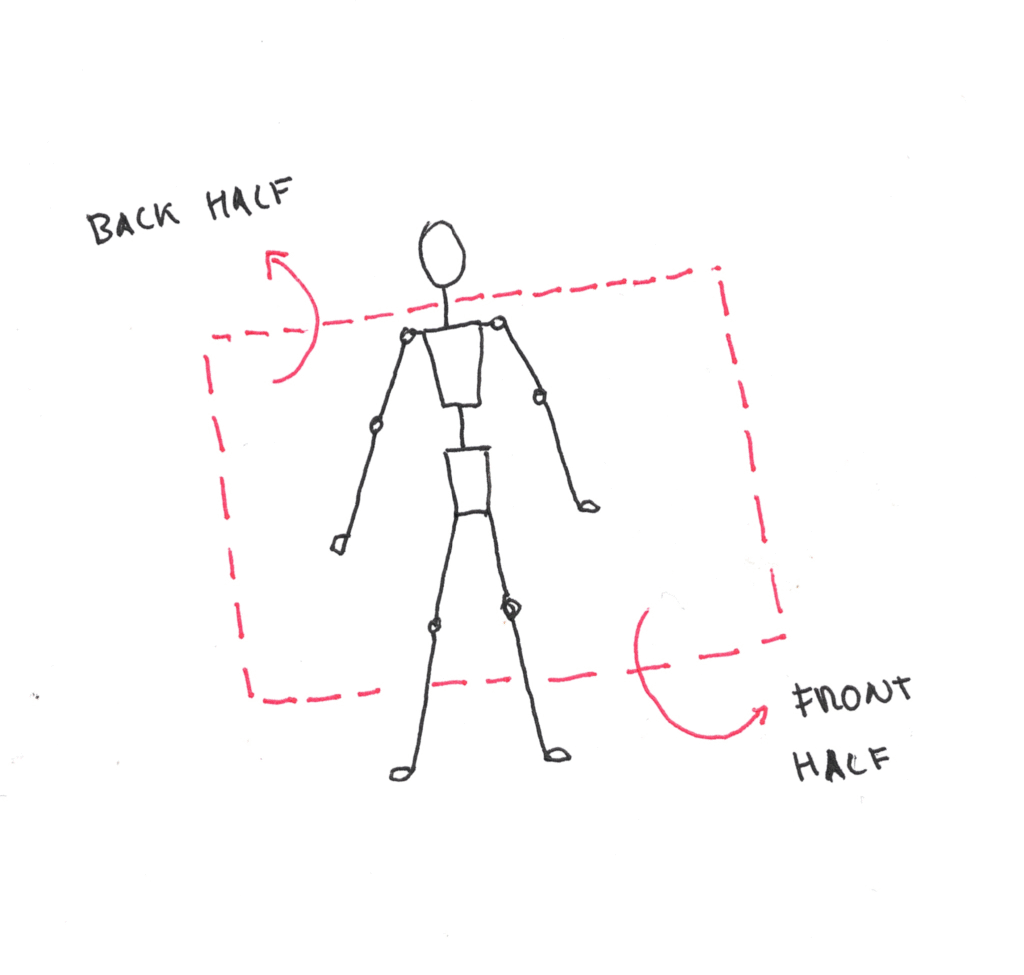
Yoga Anatomy Series | Part 1: Understanding Body Language & Movement Planes
As a yoga teacher, I understand the struggle of completing your 200-hour YTT —and sometimes…
How to survive your first yoga class?
Following up on the subject of how to get ready for your first yoga class,…
Asana Encyclopedia. Tadasana (Mountain Pose): Meaning, Alignment & History.
I’m going to break down what Tadasana (Mountain Pose) means in Sanskrit and also tell…
Pingback: How to survive your first yoga class?