
The first time I practiced Yin Yoga, I was in my living room feeling exhausted and looking for a yoga session to help me decompress on YouTube (I know, it is not the most glamorous beginning).
After scrolling for several minutes, I came across a video by Melina Ophelia—and something about it drew me in.
I had no idea that this first encounter would change my yoga journey forever.
An hour later, I was completely captivated and submerged in this slow-paced, mindful style.
But I wanted to know more.
That’s why I put this post together for you, to spread the gospel (okay, maybe just the gentle whisper) of Yin Yoga. It’s a style that often gets shoved to the back corner by the fast and flashy Power and Vinyasa flows, but trust me—Yin has some serious magic for your body and your brain.
And remember:
Like all yoga practice theory alone is insufficient: you must actually do the practice
Bernie Clark
So, roll out your mat, grab a pillow, and let’s get into the slow stuff while you sit on the floor 🙂
Modern Yoga: do we seek balance?
Before we define what Yin Yoga is, it helps to understand how modern Western yoga has been shaped—and why it’s a unique practice that never quite existed before.
What we now call yoga draws from Eastern mysticism, but it’s also been reshaped by 19th-century gymnastics and wrestling, and further tailored by Western sensibilities and desired benefits.
If you’ve been practicing yoga for a while (or you know someone who does), you’ve probably noticed that most styles today are dynamic and physically active. They’re designed to work the muscular, or yang (as we called it in yoga lingo), side of the body.
But in yogic philosophy, that’s only half the picture.
The other side of the coin is yin. At this level, we can define it as the practice that helps us work the other half of our physical body: the ligaments, joints, deep fascial networks, and even the bones (B. Clark).
You might be wondering: Wait, isn’t exercising our joints dangerous?
In short—yes and no. Like most things in life (and fitness), it depends on how we do it. Just like any form of exercise, if practiced incorrectly, it can cause harm. But Yin offers a different set of tools to work with our bodies in a more holistic, mindful way.
Because all of our tissues matter—and they all need proper attention and care if we want to achieve true health and vitality.
It’s also important to remember that the benefits you receive from your yoga practice are deeply shaped by the intentions you bring to it. In other words, your motivation—why you practice—will influence what you receive.
Yin offers a different way of relating to your body and mind. It invites a slower, more introspective experience—one that complements the outward, effortful energy of yang practices.
Together, they form a whole: because life has both a yin and a yang aspect.
They complement each other.
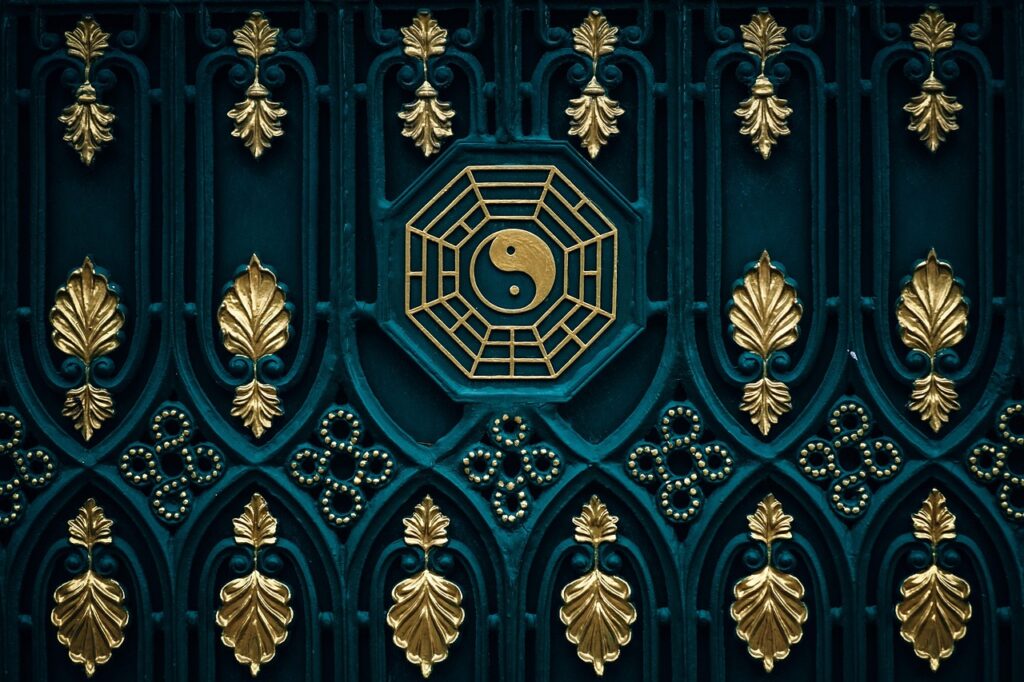
In every context, there’s a bit of yin within yang, and a bit of yang within yin.
For instance, the active postures and workouts of our yoga practice—what we call yang—can still contain yin aspects. Carefully observing the breath as we flow through a challenging Vinyasa sequence is just one example. In the midst of intensity, we can still find softness, stillness, and awareness.
Yin and Yang remind us of the importance of balance in all things. Yet in our fast-paced lives, we often overlook this essential truth—until the universe makes us stop and listen.
It’s only when we break down, fall ill, feel burned out, or get injured that we start seeking slowness. But by then, the need for rest is urgent, not intentional.
Yin Yoga offers a gentle antidote to this constant rush—a space where we can pause, breathe, and reconnect before life demands it of us.
Like two sides of one coin, yin cannot exist without yang, nor yang without yin.
Bernie, Clark.
So—after this long introduction…
What is Yin Yoga?
From a technical perspective, Yin Yoga is a slow-paced style in which postures are held for extended periods—anywhere from 2 to 20 minutes.
The practice focuses on targeting the body’s connective tissues—such as ligaments, fascia, and joints—which is why longer holds are essential. Unlike muscles (yang tissues), which respond well to rhythmic and repetitive movement, yin tissues are more plastic in nature and require a different, more sustained approach.
An important distinction to make is that in Yin Yoga, we’re not trying to stretch our ligaments or joint capsules—we’re trying to stress them.
In fact, in Yin Yoga, the key is the stress, not the stretch.
Over time, our tissues may become longer, thicker, and stronger as a result of consistent Yin practice—but we’re not aiming to stretch these tissues in any single session.
Stretch vs Stress: What’s the difference?
Stress refers to the tension or load we apply to a tissue—whether it’s a muscle, ligament, or fascia.
Stretch, on the other hand, is the elongation that may result from that stress.
In yoga, we often say we’re “stretching” our muscles, but technically, what we’re doing is applying stress to them, and that stress sometimes results in a stretch.
However, stress and stretch are not the same, and one does not always lead to the other. For example, in isometric exercises, we apply stress to the muscle without changing its length. The tissue is under tension, but there is no stretch (think of holding Plank Pose—your muscles are working hard, but they’re not lengthening).
Understanding this difference is key in Yin Yoga, where our goal is to apply appropriate stress to deeper connective tissues—not necessarily to stretch them
Modern Yin Yoga History
The deep connections between Yin Yoga and Daoism—often called Daoist Yoga—deserve their own dedicated space (and I promise we’ll get to it in another post!). Let me know in the comments if you’d be interested in reading about that.
For now, it’s worth noting that modern Yin Yoga draws foundational inspiration from certain exercises within Tai Shing Men—a form of martial arts also known as Monkey Kung Fu which is (paradoxically) amazingly fast, developed in the 20th century.
In the 1970s, a man named Cho Chat Ling—the nephew and disciple of the original master—moved to California and began teaching the practice. It was there that he met Paulie Zink, who became his student and eventual successor.
Paulie Zink began experimenting with longer holds in postures, noticing the profound effects of “marinating” in stillness. Over time, he started referring to these parts of his classes as “yoga”. However, Paulie’s approach was quite different from traditional Indian yoga—he blended both yin and yang exercises, fusing martial arts, mobility work, and stillness.
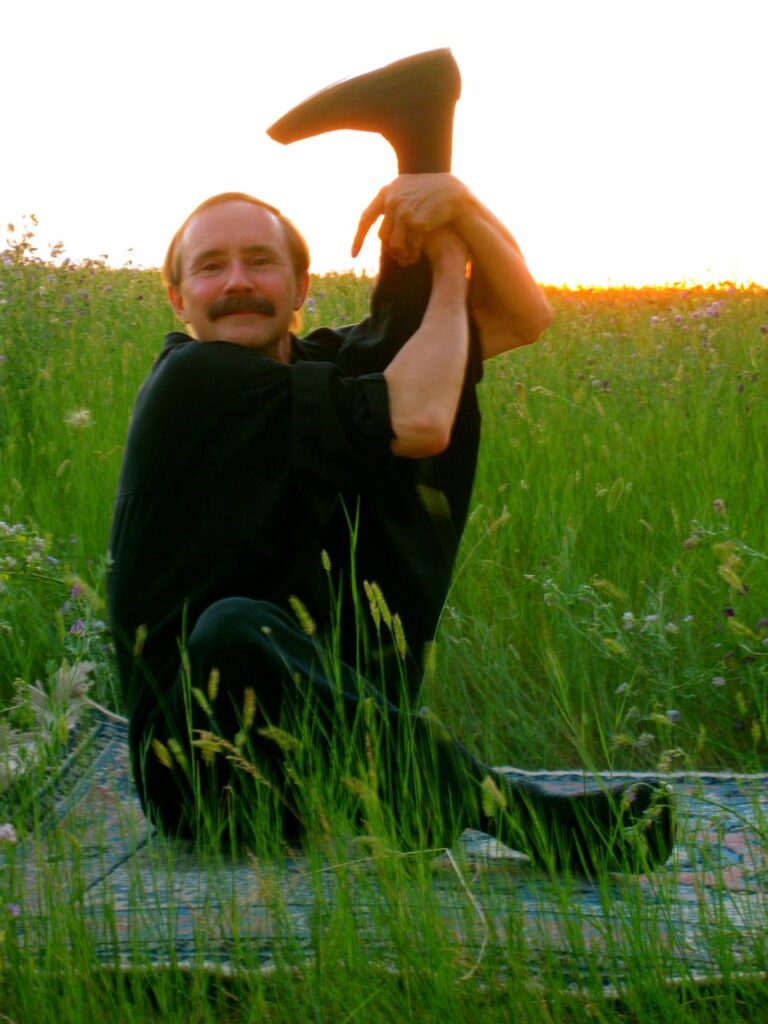
Then came the pivotal meeting between Paulie Zink and Paul Grilley in the 1980s. Grilley had a strong background in both yoga and anatomy, and one of his key realizations was that individual skeletal structure plays a major role in how each person moves. This meant that trying to force the body into a specific shape—regardless of bone variation—could actually lead to injury.
Influenced by Paulie’s yin-inspired stillness and his own anatomical insights, Grilley began teaching a new kind of class focused solely on long-held, passive postures. This became the foundation of Yin Yoga as we know it today.
In addition to this physical lineage, another turning point came in 1990 when Paul Grilley met Dr. Hiroshi Motoyama—a respected scholar, philosopher, and Shinto priest. Dr. Motoyama had developed a theory linking the body’s energetic and physical systems through the chakra system and meridian lines, proposing a model in which movement and posture could influence not only the body, but also the mind and soul.
By integrating Paulie Zink’s techniques with Dr. Motoyama’s energetic philosophy, Grilley began shaping a yoga practice rooted in a holistic view of the human experience—one that honors the deep connection between body, mind, and spirit.
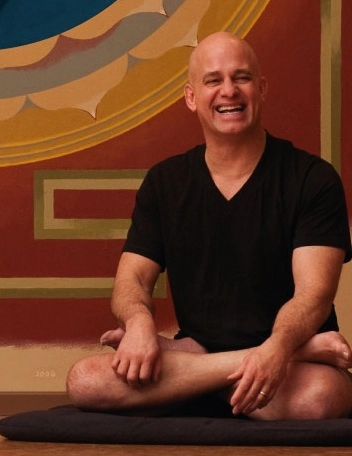
One of Paul Grilley’s students, Sarah Powers, also played a crucial role in shaping Yin Yoga as we know it today. It was she who first began calling the long-held, floor-based postures “Yin” and the more dynamic, flowing sequences “Yang.” With her, the name of the style was born.
Drawing from her background in Buddhist mindfulness teachings, Sarah developed her own integrated style—blending Yin Yoga with yang-based Vinyasa practices and meditation.
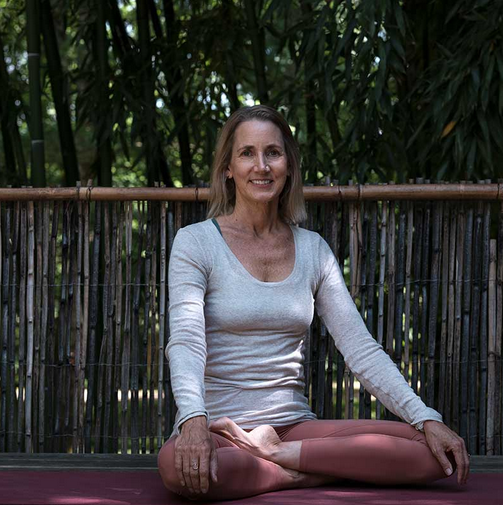
How & when practice Yin Yoga?
Now when it comes to when to practice, despite not being a single “right” time to practice Yin—everything depends on your intention and needs.
These are some of the most supportive and effective moments to roll out your mat:
- When your muscles are cool – Yin targets deeper tissues like fascia, ligaments, and joints. Practicing when your muscles are not already warmed up helps access these layers more effectively.
- Early in the morning – The body is naturally cooler at this time, and the stillness of dawn supports quiet introspection.
- In the evening before bed – Yin calms the nervous system and helps release tension from the day, making it the perfect wind-down ritual.
- Before a yang practice – Practicing Yin before Vinyasa or other active movement allows you to access your deeper tissues before the muscles heat up.
- During spring or summer – These seasons tend to bring active, outward-focused (yang) energy. Yin offers a gentle counterbalance to help regulate your inner state.
- When life feels hectic or overwhelming – In times of emotional intensity, stress, or overwork, Yin Yoga offers stillness, softness, and grounding.
- After long travel – Traveling involves constant movement and stimulation. Yin helps you land back in your body and settle into presence.
- During menstruation – While many dynamic practices are contraindicated during a woman’s cycle, Yin can be deeply supportive. It soothes cramps, releases pelvic tension, and invites rest (Speaking from experience here! If you’re looking for a yin practice in those days, feel free to practice with me)
Precautions before practicing Yin Yoga
(A gentle reminder that this is not an exhaustive list).
I know no-one does this, but I don’t want to get sued So… If you have any health concerns or specific conditions, please consult your healthcare provider before starting any new practice.
- If you are pregnant, have had recent surgery, live with diabetes, have a joint injury, or a cardiovascular condition, always speak with your doctor before engaging in Yin (or any other type of yoga) practice.
- Since deep breathing is essential in Yin, avoid wearing perfume or cologne before your session.
- Try not to eat at least two hours before practicing.
- If you’re feeling exhausted, keep your practice very soft, brief, and gentle.
- Avoid practicing if you’ve been exposed to intense sun for long periods earlier in the day.
- Remove any metallic objects (rings, watches, jewelry), and if you wear glasses, you may remove them for more comfort and ease.
- Wear loose, comfortable clothing that allows you to relax fully.
- If you get cold easily, wear layers or cozy socks—you won’t be sweating much during Yin.
- Keep props nearby: cushions, blocks, and blankets will help support your joints and comfort throughout the session.
- Turn off your phone, and create a calm environment where you can fully immerse in the practice.
- Avoid practicing near cold drafts or with air conditioning blowing directly on you.
- If you’re practicing first thing in the morning, give yourself at least 30 minutes after waking up to ground and prepare (take a shower, and empty your bowels and bladder).
3 Simple Guidelines to practice Yin Yoga
Inspired by Sarah Powers
If you’re new to Yin or want to deepen your experience, here are three simple yet powerful principles to guide your practice:
- Come into each pose to an appropriate depth
This means: let go of expectations about what a pose “should” look like. Instead, meet your body where it is today. Find your edge—the place where you first feel sensation—and pause there.
Start to travel inward, observing what arises. Sensations like a gentle stretch, a subtle squeeze, or a mild twist may be signs that the pose is working for your unique structure. Don’t push deeper. Let your breath and awareness be your guides—not your ego.
Remember: Yin Yoga invites discomfort, but it should never be painful. Stay within the sweet spot where you’re challenged, but safe.
- Resolve to remain still
Once you’ve found your edge and sensations begin to arise, don’t fight them. Instead, soften into what you’re experiencing.
Let your body speak to you, and notice what it’s saying—without rushing to fix, fidget, or escape the discomfort. Yin teaches us to stay. To breathe through the intensity. To observe rather than react.
Stillness is where the deep work begins.
However, there are two important exceptions to this advice:
- If you experience pain – Gently come out of the pose or adjust. Pain is your body’s way of saying something isn’t right. Always listen.
- If your body naturally opens – You may feel the sensation shift and soften over time. If this happens, you can mindfully go deeper, without forcing or pushing.
- Hold the pose for time
In Yin Yoga, we hold each shape for extended periods—usually between 2 and 5 minutes (but sometimes even 20!)
Once your body settles and your mind drops into the practice, remain still and stay present. Time becomes the tool that softens the tissues and deepens awareness.
This isn’t about endurance—it’s about surrender.
Beginner Tip:
New to Yin? Start by holding each pose for just 1 minute—use your favorite timer. As you get cozier with stillness, you can stretch it out (literally) a little longer each time.
And, at all times, keep this Bernie Clark Mantra in mind
Summary
There’s still so much more to explore about Yin Yoga—its unique benefits, the philosophy behind the asana names, and more. But to keep things digestible, I’ll wrap up for now with a quick summary of what we’ve covered so far.
- Yin Yoga is a slow-paced, grounding practice that beautifully complements more dynamic “yang” activities like Vinyasa, running, or HIIT.
- It targets the connective tissues—ligaments, joints, fascia, and bones—which is why poses are held for longer periods.
- Its roots trace back to a blend of Daoist philosophy, Kung Fu traditions, and Buddhist mindfulness practices.
- In Yin, the goal is to stress, not stretch, the connective tissues.
- The 3 main guidelines for practicing Yin Yoga:
- Enter the pose mindfully—go only to your personal edge.
- Stay still—observe, breathe, and resist the urge to fidget or escape.
- Hold for time—let the posture work its magic as you soften into stillness.
Conclusion & Invitation
If you’ve made it this far, I hope something in this slow, soulful practice has sparked your curiosity. Yin Yoga is less about performance and more about presence. It’s not just a style—it’s a shift in the way we relate to our bodies, our breath, and ourselves.
So next time life moves too fast, consider this your invitation to slow down.
Want more stories, guidance, and yin practices straight to your inbox?
Subscribe to my newsletter and let’s explore the deeper layers of yoga—together.
The Science Behind Stillness: How Yin Yoga Rewires Your Body | Part 2
Following up on my latest yin yoga article, I’ll delve deeper into how Yin Yoga…

Asana Encyclopedia. Vrikshasana (Tree Pose): Meaning, Alignment & History.
Today, I’ll unpack what Vrikshasana (Tree Pose) means in Sanskrit and share the story and…
The magic of Stillness: Yin Yoga Rewires Your Body | Part 1
Ever wonder why you wake up feeling like a rusty robot, or why that forward…
Yoga Anatomy Series | Part 1: Understanding Body Language & Movement Planes
As a yoga teacher, I understand the struggle of completing your 200-hour YTT —and sometimes…
How to survive your first yoga class?
Following up on the subject of how to get ready for your first yoga class,…
Asana Encyclopedia. Tadasana (Mountain Pose): Meaning, Alignment & History.
I’m going to break down what Tadasana (Mountain Pose) means in Sanskrit and also tell…
Pingback: The magic of Stillness: Yin Yoga Rewires Your Body | Part 1