
I’m going to break down what Tadasana (Mountain Pose) means in Sanskrit and also tell you the story and symbolism of its name. Plus, I’ll give you a few pointers to help you teach or do this pose the right way.
This is one of the articles I’m writing for yoga teachers and anyone who has trouble remembering Sanskrit pose names. You can read the previous article here!
What does Tadasana mean?
You know how people say, “simple ain’t always easy”?
That’s Tadasana.
I mean, you look at it and think: They’re just standing there.
But Tadasana is the base for almost every standing pose in yoga. Get this right, and you’ll balance better and feel more present.
The name comes from Sanskrit:
Tada (Mountain)
Asana (Posture)
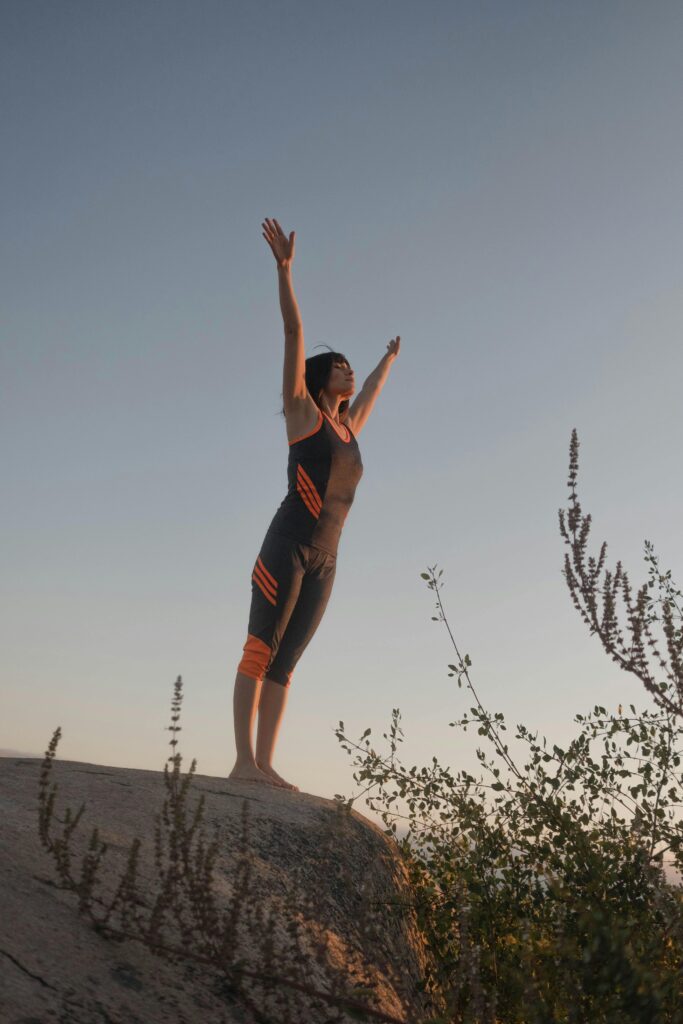
When you do Tadasana right, you’re not just standing, you are grounding yourself while rising up. You’re finding strength like a mountain.
In Ashtanga, it’s called Samasthiti, which also comes from Sanskrit:
Sama (equal)
Sthiti (standing still)
Both names—Tadasana and Samasthiti—are all about standing tall, strong, and being in the moment. Which, if you have been reading the blog for a while, will sound very familiar to you, am I right? It seems like yoga is all based on begin present.
Symbolism of Tadasana
For ages, the Himalayan mountains have been home to wandering sages and yogis looking for enlightenment in the quiet mountain caves and peaks.
Himalaya translates (I know I’m trowing a lot of Sanskrit to you guys today) as:
Alaya (abode)
Hima (snow)
However, the highest mountain range on earth is also known as Devalaya, which translates as “the abode of the gods”. Yogis looking for peace at the top wanted to get closer to the gods who also lived there.
In yogic tradition, everything existent has a consciousness, and the Himalayas were considered a crucial element to life on the planet because they are the source of the rivers, which flow toward the sea, veining the land with essential lifeblood (Kaivalya & Van der Kooij, 2010, 126).
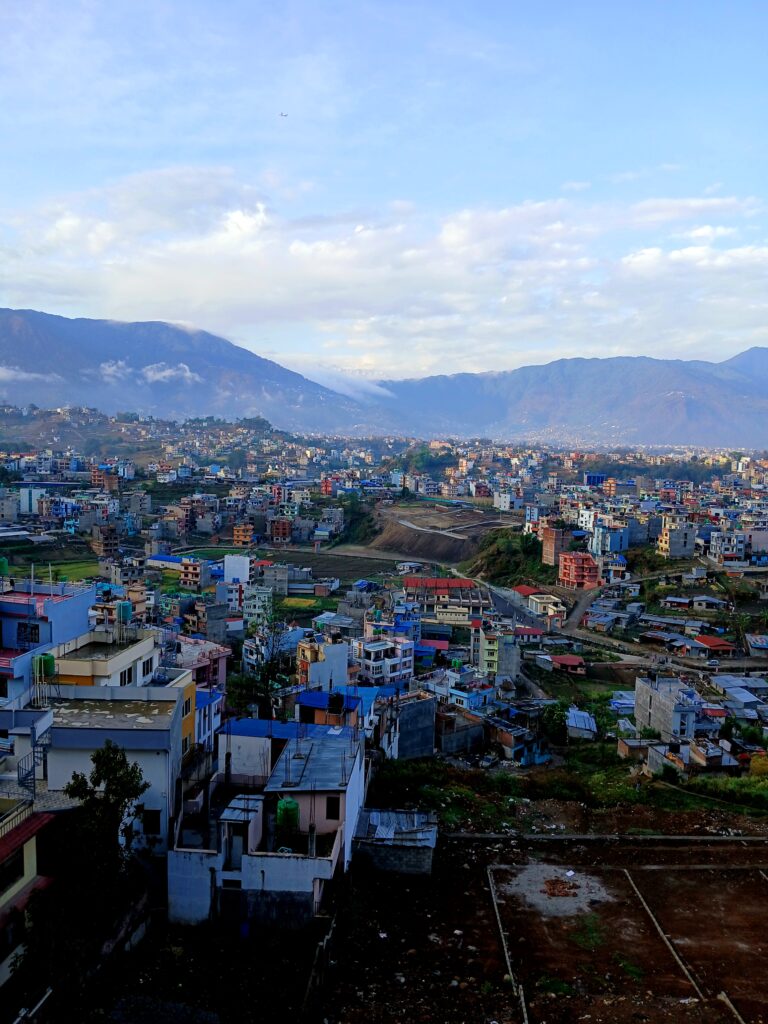
Mountains and rivers always go together, and rivers have a special meaning in Indian philosophy. People saw them as symbols of the never-ending cycle of being born and dying (known in the yogic lingo as samsara).
Metaphorically speaking, liberation awaited those who were able to cross the river’s water with the help of yoga.
That is the symbolism associated with this foundational pose.
Alignment & Cues for Tadasana
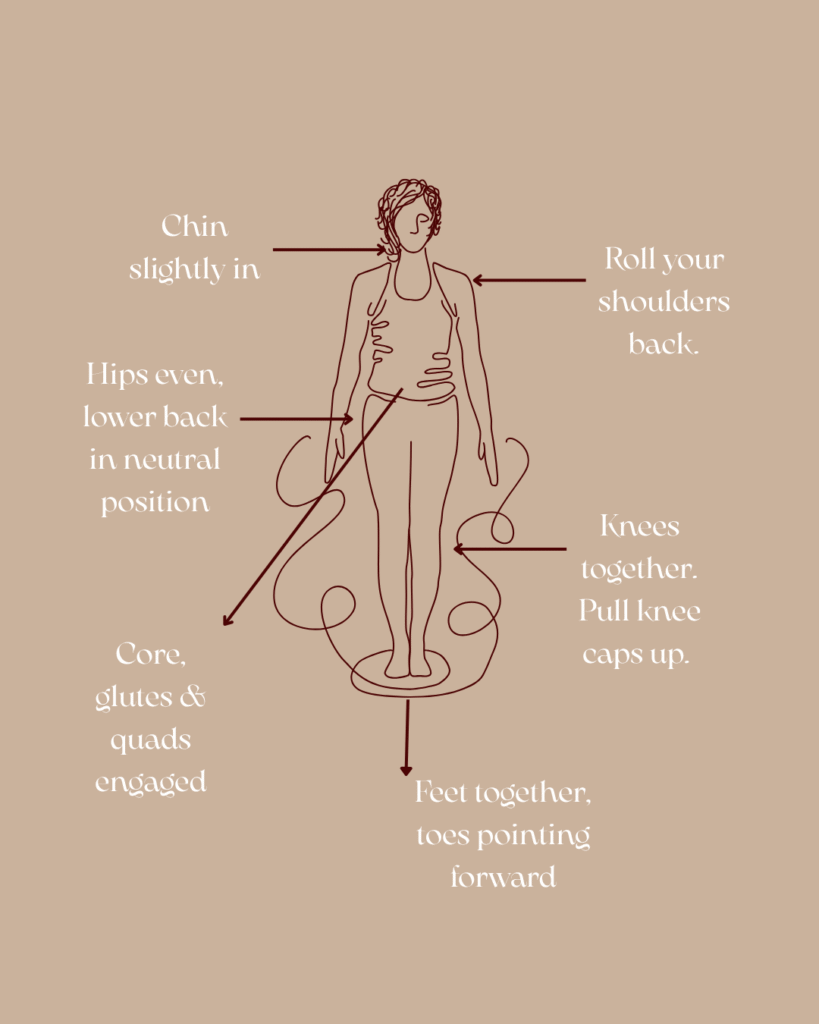
- Put your feet together, planted firmly, toes pointing forward.
- Keep your legs together. Knees touching each other, pull up your kneecaps, and rotate your upper thighs slightly inward.
- Keep your hips even and your lower back in its natural curve.
- Roll your shoulders back a bit, away from your ears, and line them up with your hips.
- Open your chest and lift your rib cage a little.
- Tuck your chin slightly.
- Let your arms hang naturally at your sides, with your inner elbows facing inward.
- Turn your palms inward and point your fingers down.
- Keep your spine long and tall.
- Engage your quads, glutes, and core a little to help you feel grounded.
- Soften your gaze straight ahead.
Modifications
- Pranamasana (Mountain Pose with Namaste)
Palms touching each other in front of the heart.

- Tadasana variation feet wide
If keeping the knees together is uncomfortable, or you feel out of balance, you can spread your feet hip wide apart 🙂
- Tadasana Paschima Namaskarasana (Mountain Pose with Reverse Prayer Pose)
If this position is not available to you -as it requires a lot of flexibility and mobility in the shoulder area-, you can also modify it by grabbing opposite elbows with hands.

Who should not practice Tadasana?
Contraindications & Precautions
- Don’t do this pose if you’ve had recent surgery or a bad injury to your knees, ankles, or hips
This pose might stress this areas in excess as you are putting a lot of pressure on them.
- Avoid or practice carefully if you suffer from low blood pressure.
Some people might experience dizziness when holding the pose for long periods of time.
- Avoid if you suffer from vertigo or if you are suffering from a migraine.
Tadasana could make vertigo or migraines worse, especially if you close your eyes.
- If you are pregnant (especially if you are suffering from dizziness), be careful.
Standing poses can be good, but always pay attention to your balance and how your body feels.
What’s the mythical history of Tadasana?
In Hindu stories, King Bhagiratha prayed to Ganga Devi, who is the goddess of the Ganges River. He wanted her to come down from the sky and clean up the Earth. She said yes, but only if someone could handle her really strong water as it fell.
Then Shiva, known as the protector, showed up. He caught Ganga in his hair, which made her fall softer and guided her water to the ground.
Where does the river start? In the Himalayas Mountains, where Shiva stood still, strong, and looking good.
It’s like when we do Tadasana pose. Our heads are closest to the sky, so they catch stuff, like a holy receiver. From there, energy and good stuff can flow down through us, just like Ganga’s water flowing from Shiva’s head to feed the world.
Tadasana asks us to be like that steady mountain, stuck on the ground, and ready to receive the blessings that flow from above.
Final Reflections on Tadasana
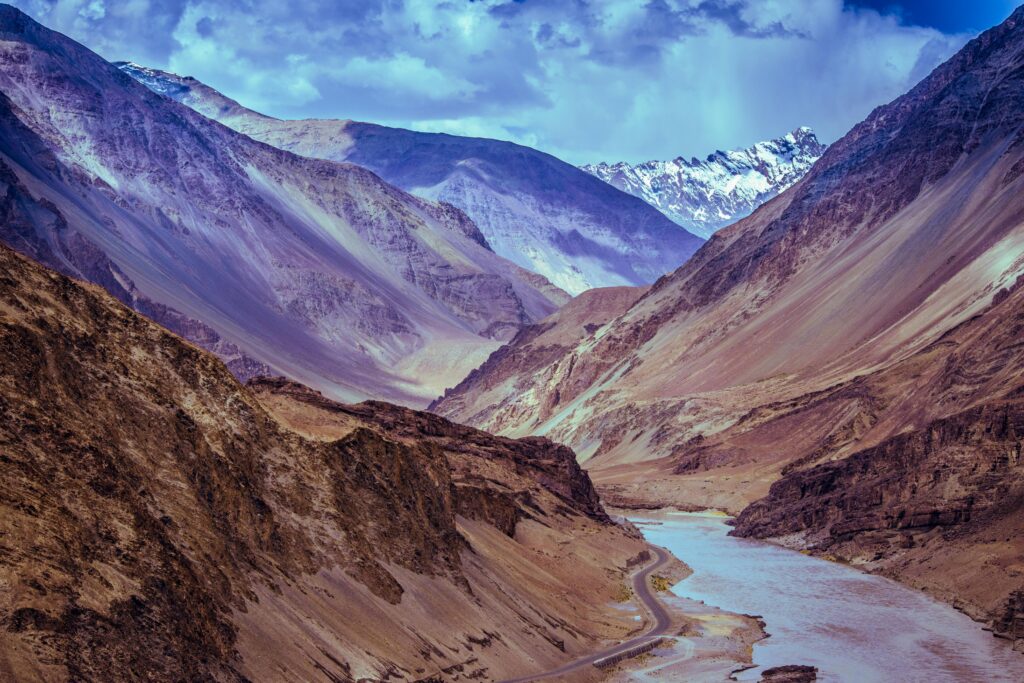
At first glance, Tadasana may seem like just standing—but within its stillness lies immense power. Like the Himalayas that cradle the source of the sacred Ganges, this posture invites us to root deeply into the earth while reaching gently toward the sky.
We embody the mountain: steady, open, unwavering. And in that steadiness, something shifts. We remember that balance doesn’t come from force, but from alignment. That strength can be soft. That stillness can be alive.
So next time you come into Tadasana, pause. Feel the myth alive in your body. Be the mountain. Let the blessings flow.
If Tadasana sparked something in you, stay tuned for the next entry in the Asana Encyclopedia, and subscribe to my newsletter.
The Science Behind Stillness: How Yin Yoga Rewires Your Body | Part 2
Following up on my latest yin yoga article, I’ll delve deeper into how Yin Yoga…

Asana Encyclopedia. Vrikshasana (Tree Pose): Meaning, Alignment & History.
Today, I’ll unpack what Vrikshasana (Tree Pose) means in Sanskrit and share the story and…

The magic of Stillness: Yin Yoga Rewires Your Body | Part 1
Ever wonder why you wake up feeling like a rusty robot, or why that forward…
Yoga Anatomy Series | Part 1: Understanding Body Language & Movement Planes
As a yoga teacher, I understand the struggle of completing your 200-hour YTT —and sometimes…

How to survive your first yoga class?
Following up on the subject of how to get ready for your first yoga class,…
Asana Encyclopedia. Tadasana (Mountain Pose): Meaning, Alignment & History.
I’m going to break down what Tadasana (Mountain Pose) means in Sanskrit and also tell…
Pingback: Yoga Anatomy Series |Part 1: Body Language & Movement Planes
Pingback: Asana Encyclopedia. Vrikshasana (Tree Pose): Meaning, Alignment & History.